Reviewing Information Requirements for 3pl Audit Software
Picking 3pl Audit Software needs more than comparing functions. Businesses must initially identify whether a system can accept, arrange, and verify the functional and payment information that forms 3pl Audit Software their logistics expenses.
A valuable assessment begins with the information already produced by service providers, storehouses, transportation management systems, enterprise source preparation platforms, and 3PL companions. Recognizing those sources aids groups recognize compatibility gaps prior to execution.
FreightOptics sells 3pl Audit Software.
Beginning With Operational Data Sources
Operational information provides the context needed to evaluate whether a charge matches the solution that was asked for and supplied. Relevant records might consist of delivery days, origin and location locations, service degrees, package or pallet details, weights, dimensions, tracking identifiers, distribution status, accessorial occasions, and storehouse activity.
Companies should examine exactly how this information is kept and exchanged. Some partners may give structured documents, while others utilize system assimilations, sites, or standard digital papers. During evaluation, verify whether the software application can bring these resources together without needing substantial handbook preparation. It needs to likewise preserve vital identifiers so delivery, order, invoice, and distribution records can be connected properly.
Check Out Billing and Agreement Information
Invoicing data is central to an audit because invoices contain the quantities that require to be checked. Vital fields can include billing numbers, invoice days, delivery recommendations, billed services, base transport charges, gas fees, accessorial costs, tax obligations, debts, adjustments, and settlement standing. For warehouse and satisfaction activity, services may also require storage, taking care of, pick-and-pack, obtaining, returns, and unique service charges.
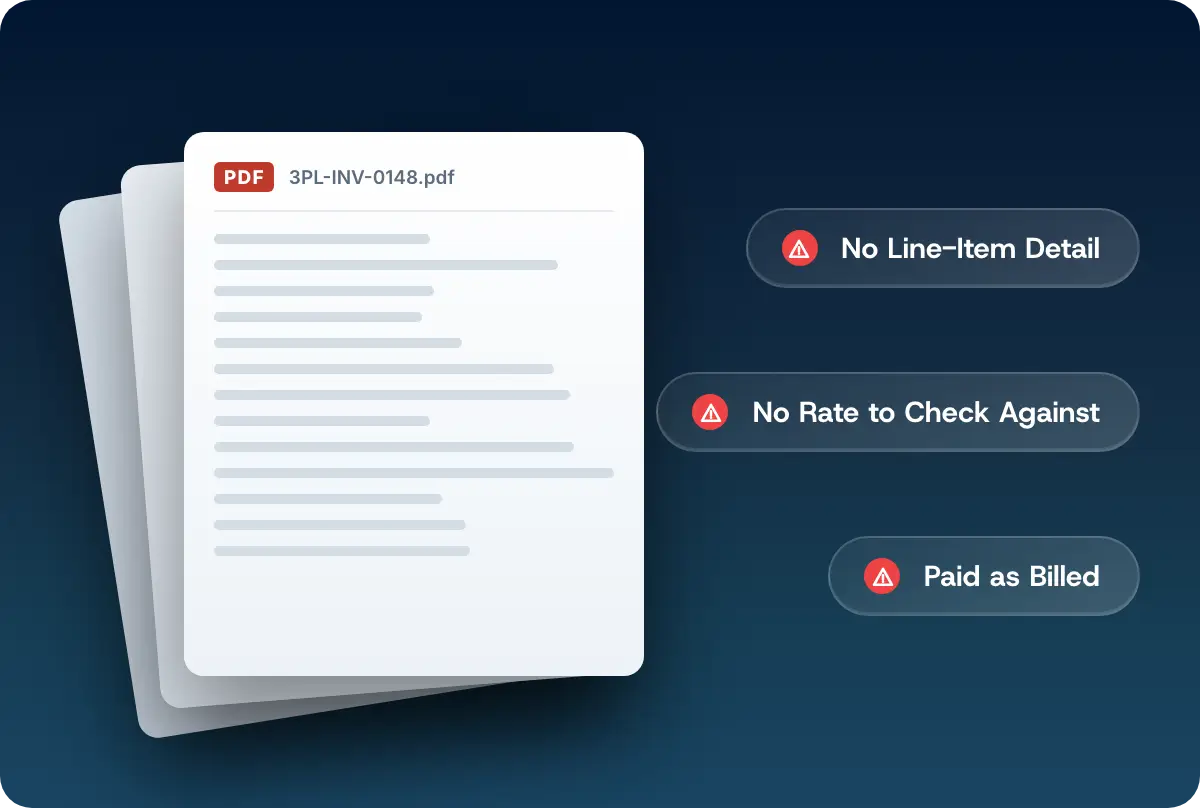
Contract and price information is entitled to equal attention. A system might require to review worked out prices, minimum charges, dimensional rules, gas timetables, zone definitions, additional charge conditions, money requirements, and reliable days. Ask how these terms are stood for and kept, particularly when arrangements differ by service provider, customer, center, lane, or service type. Clear assistance for versioned guidelines can help guarantee a billing is assessed against the terms that applied when the solution occurred.
Assess Data High Quality and Matching Needs
Also qualified audit software program relies on reliable resource info. Examination groups must examine duplicate documents, missing tracking numbers, irregular address layouts, conflicting weights, unit distinctions, insufficient accessorial codes, and day or time-zone variances. They need to additionally determine which fields are mandatory for matching invoices to deliveries, orders, agreements, and proof-of-delivery details.
A solid assessment consists of representative examples as opposed to only clean examination files. Usage average shipments, exemptions, returns, worldwide motions, multi-package orders, and invoices having credit scores or disputed charges. This exposes whether the platform can recognize connections across documents and clarify why a cost was approved, flagged, or turned down.
Think About Coverage, Controls, and Data Accessibility
The worth of audited data prolongs past finding private discrepancies. Organizations may need summaries by service provider, center, consumer, service level, lane, delivery type, or payment period. They may likewise wish to identify recoverable errors from valid charges and keep track of persisting problems. Confirm that the software application can offer useful coverage while keeping the transaction-level details required for testimonial.
Information accessibility and administration must be part of the evaluation as well. Testimonial individual permissions, audit backgrounds, export alternatives, retention practices, and the capability to paper decisions or corrections. These capacities support partnership amongst logistics, financing, procurement, and operations teams without shedding the initial document or the thinking behind a modification.
Construct an Examination Checklist
Before choosing a system, produce a checklist that maps each needed information resource and area to a business function. Include functional events, invoices, rate arrangements, account frameworks, exemption codes, and reporting needs. Record the anticipated format, upgrade frequency, accountable proprietor, and any kind of improvement called for before the data can be used.
FreightOptics supplies 3rd Event Logistics Audit solutions, and its 3pl Audit Software can be taken into consideration along with the organization's existing systems, companion needs, and audit procedures. A focused review of data demands aids organizations select software application that fits their functional environment and sustains constant, explainable billing evaluation.
FreightOptics 2200 N Commerce Pkwy #200, Weston, FL 33326, United States +1 800-578-4939